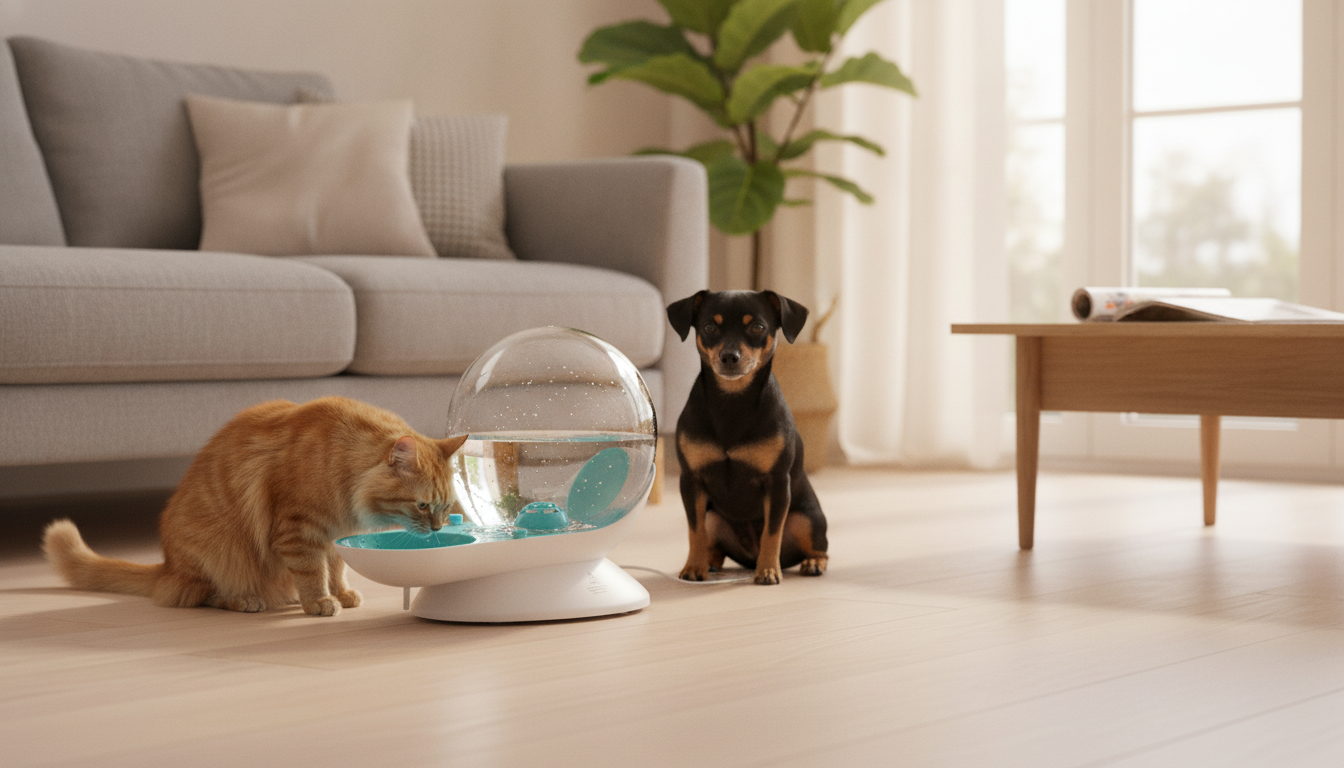
Cats and dogs often drink more consistently when water is fresh, circulating, and placed in a spot they like. An automatic pet water fountain helps keep water moving, supports filtration, and reduces the “stale bowl” problem—especially helpful for multi-pet homes, busy schedules, and pets that tend to ignore still water. The key is choosing a size, flow style, and cleaning routine that match the pet’s habits and the household’s pace.
Many pets show stronger interest in water that looks and sounds fresh. A fountain can make drinking feel more natural and rewarding, particularly for cats that “hunt” moving water or dogs that only remember to drink when they’re already thirsty.
Hydration plays a role in overall wellness, including urinary health in cats. For general pet care and nutrition context, see the American Veterinary Medical Association (AVMA) pet owner resources. For feline urinary concerns and why consistent water intake matters, Cornell’s overview of Feline Lower Urinary Tract Disease is a helpful starting point.
Not all fountains fit every pet. A shy cat might want a quiet pool, while a curious dog might prefer a visible stream. Consider these practical factors before committing to a style.
Use this snapshot to decide whether a fountain fits the household and the pet’s preferences.
| Feature | Automatic fountain | Standard bowl |
|---|---|---|
| Water freshness | Circulates and filters; can stay appealing longer | Stagnant; often needs more frequent full refresh |
| Encourages drinking | Often higher for pets drawn to movement | Depends on pet; some drink less |
| Maintenance | Pump + parts require regular cleaning; filters need replacing | Simple wash and refill |
| Noise/energy | Low but nonzero; depends on pump and water level | Silent; no power |
| Best for | Multi-pet homes, picky drinkers, busy schedules | Low-maintenance setups, travel kits, backup bowls |
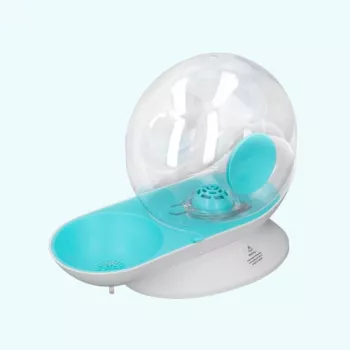
If the goal is fewer refills without giving up a “fresh water” feel, a mid-sized reservoir is often a comfortable middle ground. The 2.8L Automatic Pet Water Fountain is designed for everyday use and can work well for many single-pet households, with enough capacity to remain practical in some multi-pet homes depending on how much your pets drink.
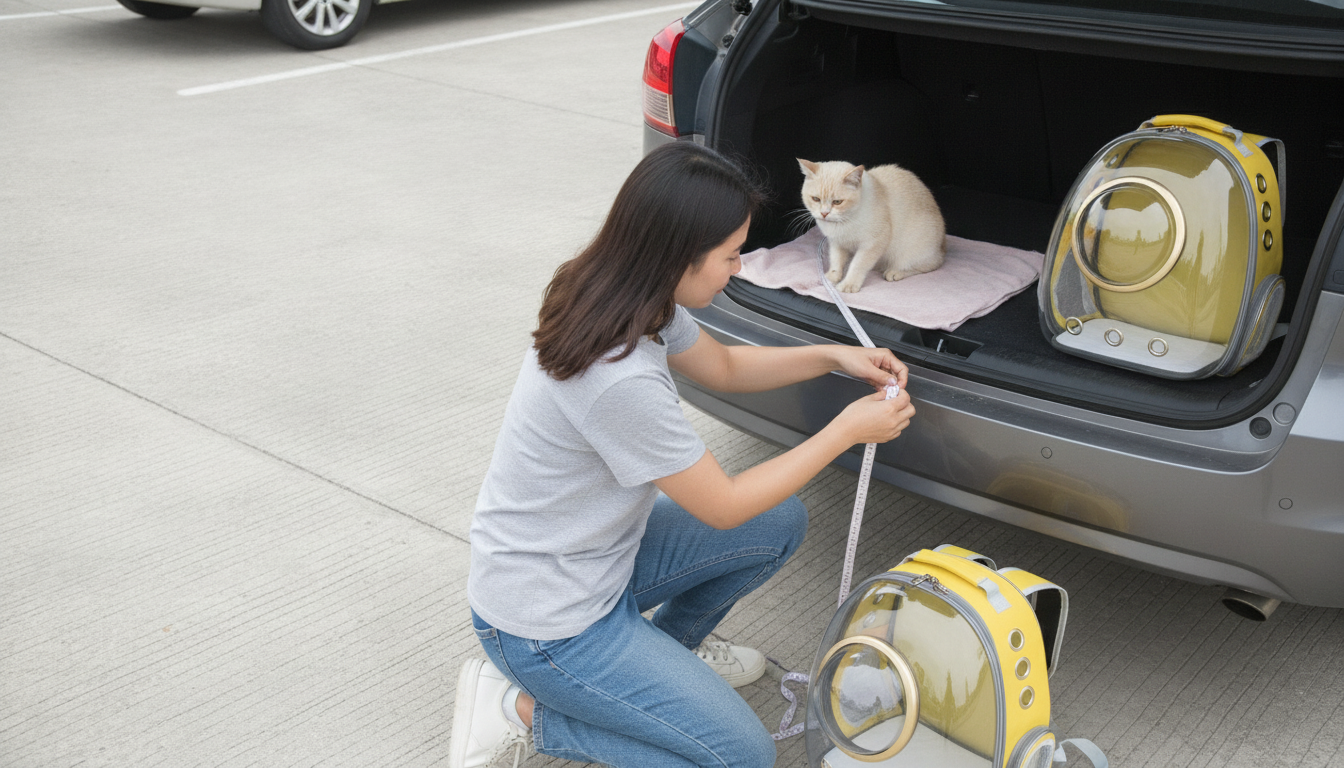
For homes that spend time on the road—weekend trips, park days, or longer drives—keeping pet supplies organized can make water breaks and cleanups easier. A dedicated organizer can help store spare filters, a backup bowl, towels, and a small bottle of dish soap:
The biggest difference between “love it” and “regret it” usually comes down to upkeep. A simple routine keeps the flow steady, the pump quiet, and the water more appealing.
Yes, as long as it’s placed on a stable surface, the cord is kept out of reach, and the water level stays above the minimum so the pump remains submerged. Follow the unit’s instructions and prioritize models with low-water protection if that feature is available.
A practical schedule is a quick top-off and wipe daily or near-daily, with a full disassembly and wash about once a week. Clean the pump/impeller weekly or every other week, and increase frequency in warm weather or multi-pet homes.
The most common causes are low water level, a clogged filter, or debris in the pump/impeller. Top off first, then clean the impeller area, replace or rinse the filter as directed, and reassemble carefully to ensure parts seat correctly.










Leave a comment