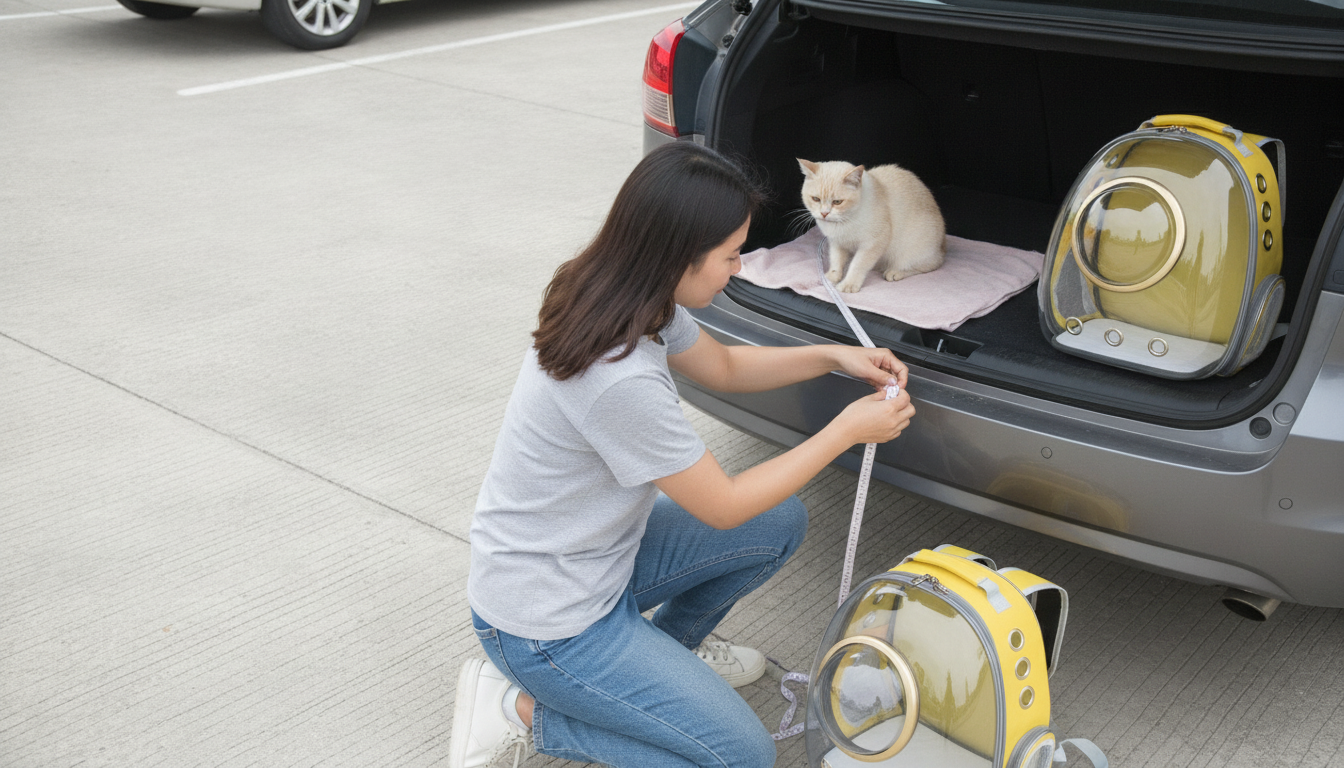
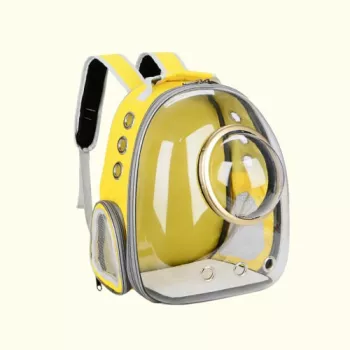
Choosing the right size transparent backpack carrier starts with a few quick measurements and an honest look at your cat’s comfort level. A carrier that’s too small can make a cat feel trapped, while one that’s too large may allow shifting that feels unstable during walks or travel.
Use a digital scale if possible. If your cat won’t sit still, weigh yourself, then weigh yourself holding your cat, and subtract. Always compare your cat’s weight to the backpack’s maximum weight rating, and stay comfortably under the limit.
With your cat standing naturally, measure from the tip of the nose to the base of the tail (not the tail tip). This helps you judge whether the interior length will allow your cat to sit and turn without pressing against the shell.
Wrap a soft measuring tape around the broadest part of the chest, just behind the front legs. Chest girth is often the most important measurement for fit, especially for the entry opening and interior width.
Measure from the floor to the top of the shoulder blades while your cat is sitting. This gives a practical reference for how much vertical space your cat needs to sit upright comfortably inside a transparent backpack carrier.
Look for enough room for your cat to sit, lie down, and turn around without curling tightly. Ventilation panels should remain unobstructed, and the base should support your cat evenly. If your cat is between sizes, prioritize the brand’s weight limit first, then choose the size that offers more stable support and appropriate interior space.
For a deeper walkthrough and sizing guidance, visit the full guide: How do I measure my cat to choose the right size transparent backpack carrier?
Comfort signs include relaxed posture, steady breathing, and the ability to change positions without struggling. If your cat is panting, constantly pawing at the door, or pressing against the shell, the carrier may be too tight or poorly ventilated for the situation.











Leave a comment