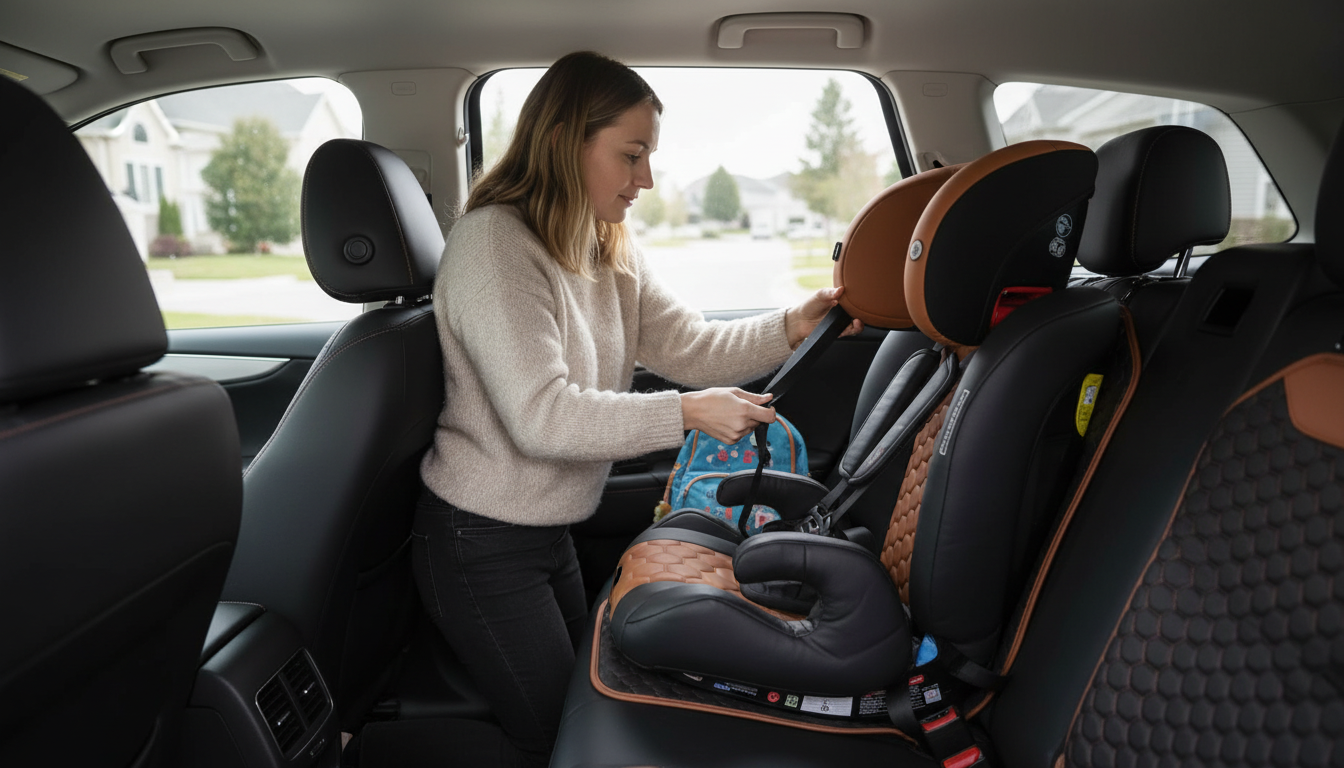
Switch to a booster seat when your child has outgrown their forward-facing car seat with a harness—typically when they exceed the seat’s maximum height or weight limits, or when their shoulders rise above the top harness slot (check your specific seat’s manual). Many kids make this transition around ages 4–8, but the safest timing depends on fit, not age.
A belt-positioning booster is designed to make the vehicle’s seat belt fit correctly. It raises your child so the lap belt sits low on the hips (not the belly) and the shoulder belt crosses the center of the chest and shoulder (not the neck or face). If the belt doesn’t sit in these positions without a booster, your child isn’t ready to ride without one.
Most children are ready for a booster when they can sit upright for the entire ride, follow safety rules (no leaning or slouching), and meet the booster’s minimum requirements. Many boosters require at least 4 years old and 40 pounds, but the product label is the final word. A child who frequently falls asleep in the car may do better staying in a harnessed seat longer so they remain properly positioned.
High-back boosters are often a good match when your vehicle has low seat backs, no head restraints, or you want extra side support and help positioning the shoulder belt. Backless boosters can work well when your vehicle seat provides adequate head support and the belt fit is already close. Either way, the booster should be used with a lap-and-shoulder belt (not a lap-only belt).
For a more detailed checklist, seat-belt fit tips, and common mistakes to avoid, read the full guide here: When should I switch my child to a booster seat?
Your child can stop using a booster when the vehicle seat belt fits correctly without it: lap belt low on the hips, shoulder belt across the middle of the chest and shoulder, and they can sit back with knees bending at the seat edge for the whole ride. This commonly happens around 4’9″ tall, but fit matters more than age.









Leave a comment